


Bonded Seals Dowty Seals
Characteristics of Bonded Seals .An ideal pressure gasket .Reliable sealing at both high and low pressures, with high- and low-temperature capability .Reduced bolt torque without loss of tightening
Send Inquiry
Characteristics of Bonded Seals
.An ideal pressure gasket
.Reliable sealing at both high and low pressures, with high- and low-temperature capability
.Reduced bolt torque without loss of tightening load; the metal ring prevents rubber compression
.The metal ring helps prevent compression of the rubber sealing element
Bonded seals are available in a range of material combinations, including:
.Mild steel . Nitrile -30 °C to +100 °C
.Mild steel . HNBR -20 °C to +150 °C
.Stainless steel .Viton -20 °C to +200°C
.Brass .EPDM -50 °C to +150°C
.Aluminium .Silicone -60°C to +250°C
We supply bonded seals in standard and self-centering styles across the following ranges: Metric, Inch, BSP, German Metric and French Metric.
Product Details
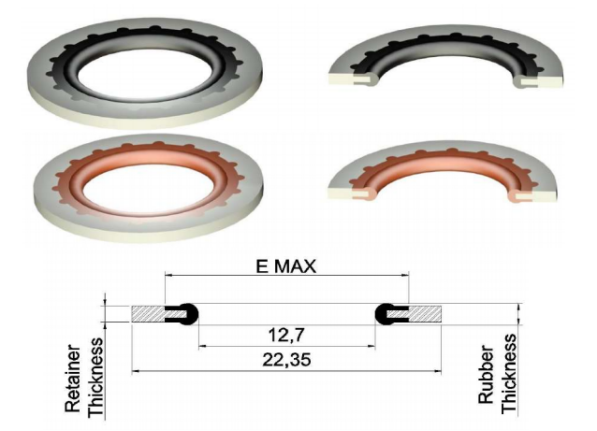
GM500/WX/US/USIT 1
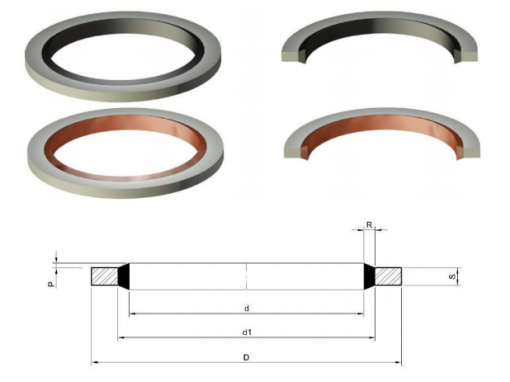
GM500 Self Centering /WZ /USS/USIT 1 SF
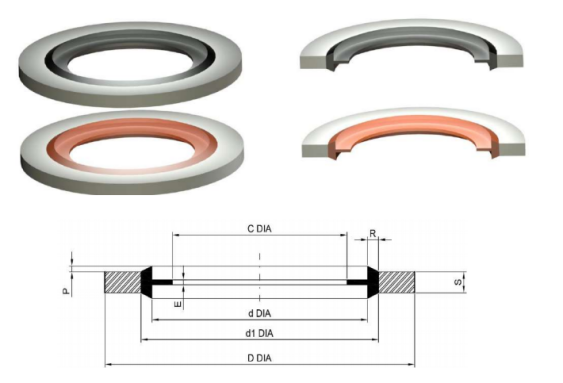
GM 1000
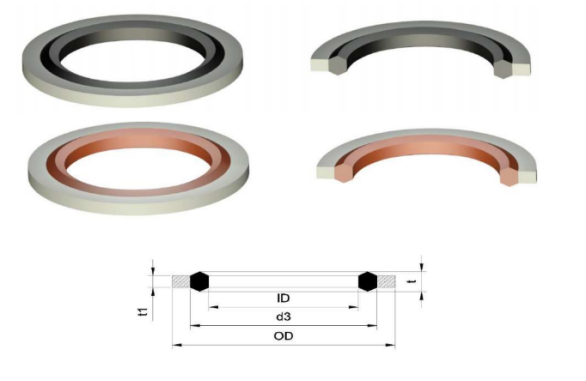
GM 2000
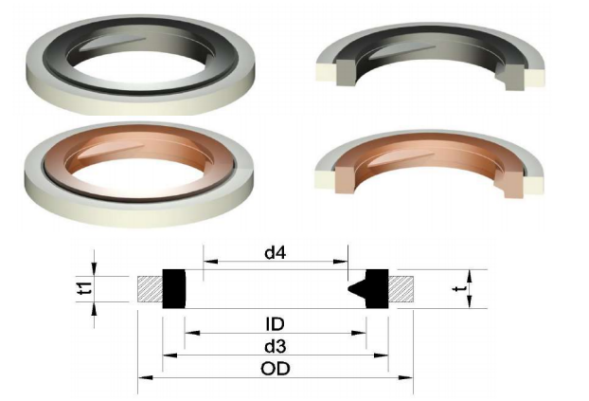
600
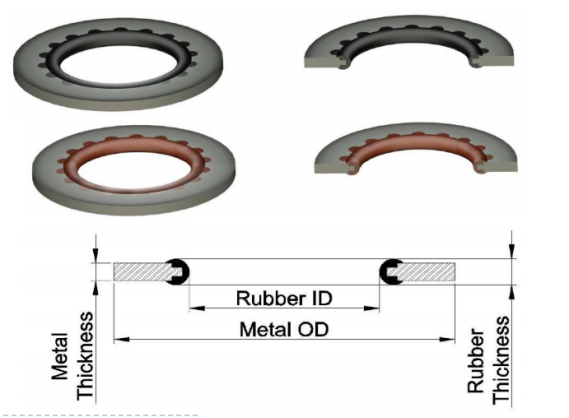
610
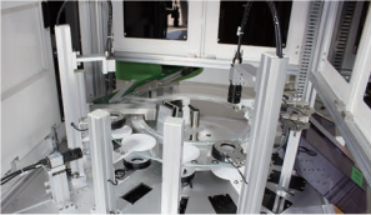
Our quality inspection process uses automated vision inspection.
Four detection modules are positioned around the edge of the turntable. Each module captures images and sends them to the software system for analysis. Non-conforming products are marked and rejected through the defective-product window, while qualified products are collected. The pass rate can reach 99.5%.
What is the difference between a bonded seal and a Dowty seal?
Bonded seal and Dowty seal are often used interchangeably for the same type of sealing component. However, terminology can vary by industry and context. Both are composite seals designed to provide reliable sealing under high-pressure conditions, particularly in hydraulic and pneumatic systems.
What Is a Bonded Seal?
A bonded seal is a washer comprising a metal ring—usually steel or stainless steel—with a vulcanized rubber sealing element, typically nitrile rubber or FKM, bonded to its inner diameter. This construction forms a durable, reusable sealing washer designed to withstand high pressures and temperatures. When compressed between two surfaces, such as a bolt head and housing, the rubber deforms to fill gaps and create a leak-proof seal.
What Is a Dowty Seal?
Dowty seal originally referred to a brand name for bonded seals developed by the British engineering company Dowty Group. Over time, the term “Dowty seal” became a generic term in many industries, particularly in the UK and Commonwealth countries, for bonded seals in general. In practice, a Dowty seal is a type of bonded seal, although not every bonded seal is a Dowty seal in the strict branding sense.
Key Differences
|
Feature |
Bonded Seal |
Dowty Seal |
|
Definition |
General term for metal-rubber sealing washers |
Brand-originated term for bonded seals |
|
Material |
Metal, usually steel, combined with bonded rubber |
The same materials |
|
Usage Context |
Used across industries worldwide |
A term often used in British and Commonwealth industries |
|
Interchangeability |
Functionally interchangeable |
Often considered equivalent to a bonded seal |
Applications
Bonded seals and Dowty seals are widely used in:
Hydraulic fittings
Fuel systems
Oil drain plugs
High-pressure connections
Automotive and industrial machinery
Bonded seals and Dowty seals perform the same function and share the same structure; their difference is mainly one of naming and origin. “Dowty” is essentially a branded or colloquial term for a bonded seal, and the two are functionally equivalent in practical applications. Whatever the name used, these seals help prevent leaks in high-pressure systems and support long-term mechanical integrity.
What does a bonded seal do?
A bonded seal is a reliable sealing device designed to provide a tight, leak-proof seal in high-pressure applications. It consists of two main parts: a metal washer, typically made from stainless or carbon steel, and an elastomeric sealing ring, commonly made from materials such as nitrile rubber, Viton or silicone, bonded to the washer’s inner edge. The seal prevents fluid or gas from leaking around bolts, screws and other fasteners in hydraulic, pneumatic or mechanical systems.
How It Works
When installed between two flat surfaces, typically where a bolt or threaded fitting is tightened, the metal washer provides structural support while the rubber insert compresses and deforms slightly. This forms a tight seal against both the mating surface and the fastener. The rubber’s elasticity accommodates minor imperfections in the sealing surfaces to help create a durable, leak-free connection.
Advantages of Bonded Seals
High Pressure Resistance: Bonded seals are suitable for high-pressure systems and are often used in hydraulic and pneumatic applications.
Temperature and Chemical Resistance: Performance across different environments depends on the rubber material used. For example, Viton can provide high-temperature or chemical resistance.
Reusable in Some Cases: The elastomer may degrade over time, but the metal washer adds durability. In less critical systems, a seal may sometimes be reused.
Easy to Install: Bonded seals can be installed quickly and easily without special tools, making them convenient for OEM and maintenance applications.
Common Applications
Bonded seals are used in a range of industries, including:
Automotive: Sealing engine bolts, oil drain plugs and transmission parts.
Aerospace: Supporting leak-free connections in hydraulic and fuel systems.
Industrial Equipment: Used in pumps, compressors and machinery.
Hydraulic Systems: Sealing connections between hydraulic fittings and threaded joints.
In summary, a bonded seal provides an effective sealing solution for threaded components and fasteners exposed to fluids or gases. The combination of metal strength and rubber flexibility supports reliable performance in demanding environments, making bonded seals an important component in mechanical and hydraulic systems.
Send an Inquiry
Related Products

Yjm Oil Sump Gasket 11 13 7 600 482
Fitment The YJM oil sump gasket, reference 11 13 7 600 482, is listed for both left-hand-drive and right-hand-drive models. This fitment information is intended···

Yjm Oil Sump Gasket 11 13 7 511 224
Fitment This YJM oil sump gasket is listed for the BMW vehicle applications below. Use the fitment information as a starting point when identifying a replacemen···

Seal Oil Filter Housing Engine Side Bmw Petrol 11427537293
This product is identified as a seal for the engine-side oil filter housing on BMW petrol vehicles. The product reference is 11427537293. When servicing the oil···

Oil Sump Gasket 11137548031 Bmw
BMW Oil Sump Gasket 11137548031 The oil sump gasket identified by part number 11137548031 is a BMW replacement part intended for use at the joint between the en···